This post is sponsored by Darwin’s Natural Pet Products
Cats tend to be a little more discriminating than dogs about ingesting random things, but some cats still get into some very strange stuff. If your cat ingests a toxic substance, immediate emergency treatment is usually critical to prevent life-threatening complications. The following 10 substances are the most frequently seen toxicology cases in veterinary emergency clinics.
Lilies
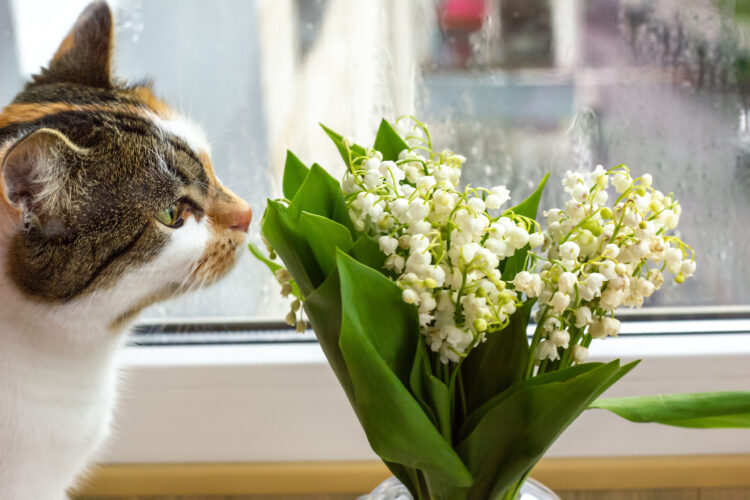
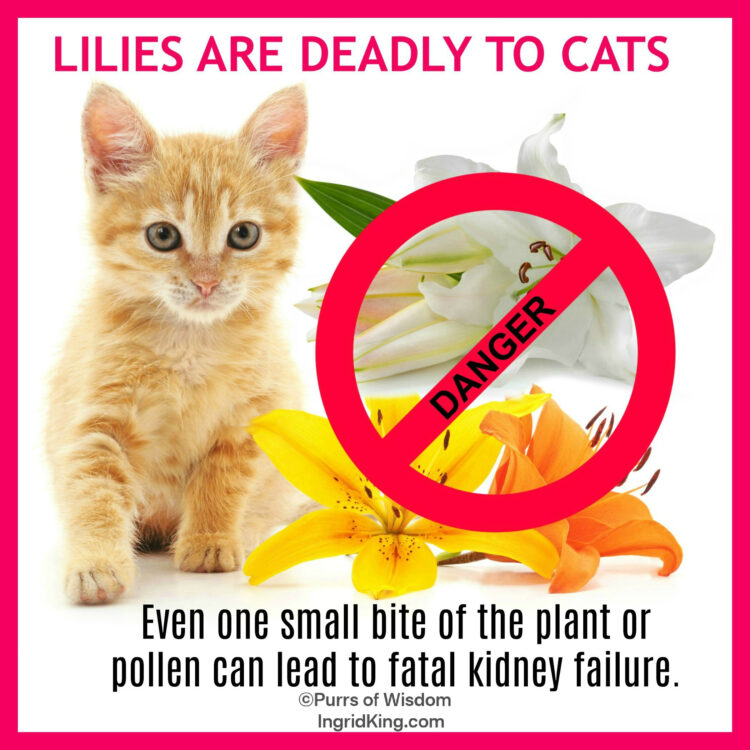
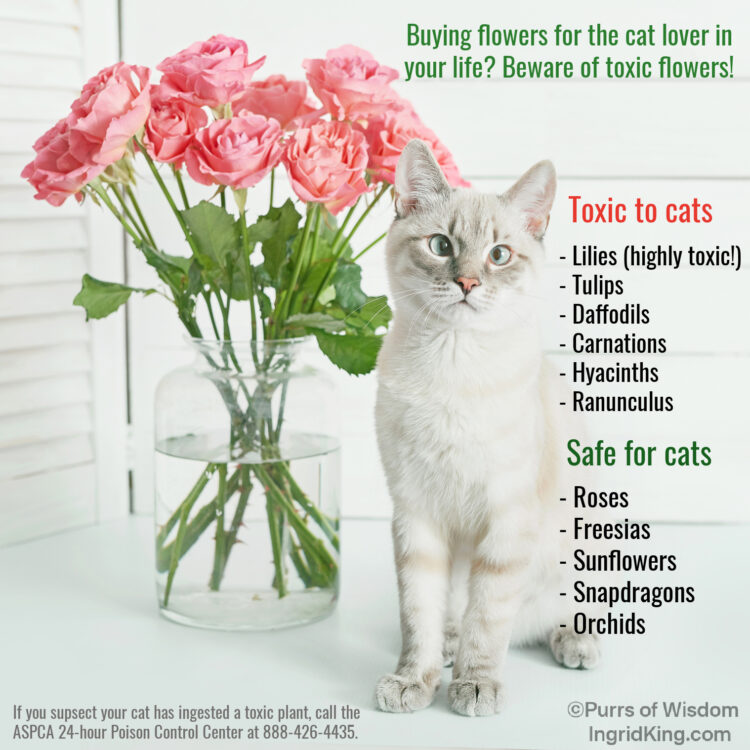
All plants in the lily family are toxic. Calla and Peace Lilies are local irritants, Lily of the Valley causes cardicac arrythmias. The truly toxic lilies, including Easter Llilies, Stargazer Lilies and Tiger Lilies, cause renal toxicity, which, if not treated immediately, will be fatal. Every part of the lily is toxic, even the water they’re in. Signs of lily toxicity include vomiting, lethargy, anorexia within 6-12 hours of ingestion. Immediate treatment is critical to survival, and will include aggressive intravenous fluid therapy for at least 48 hours after ingestion. Your veterinarian may also administer activated charcoal to neutralize any remaining toxins in the digestive tract. After 18-24 hours, the prognosis, even with treatment, is poor.
Cannabis
Now that cannabis has become legal in many states, veterinarians are seeing more signs of cannabis poisoning in pets. Toxicity can occur when cannabis is inhaled as second hand smoke, or ingested in the form of rolled joints, brownies (which add chocolate poisoning into the mix) and other laced edibles. Signs can start within 30-90 minute of ingestion or inhalation and include altered mental state, vomiting, hypersalivation, seizures, and coma. Treatment will include induction of vomiting and supportive care, and prognosis is usually favorable unless complications such as pneumonia develop.
Chocolate
Cats do not have the ability to taste sweets, so chocolate poisoning is a more common problem with dogs, but some cats still seem to get themselves in trouble. The toxic components in chocolate, caffeine and theobromine, vary in concentration, depending on the type of chocolate ingested. The highest concentrations are found in cacao beans, dry cocoa powder and unsweetened baking chocolate. Symptoms of chocolate toxicity include vomiting, panting, restlessness, seizures, weakness and cardiac arrythmias. Treatment includes inducing vomiting, administration of activated charcoal, gastric lavage and enemas if large quantities have been ingested, and IV fluids. Prognosis is favorable with immediate treatment, but guarded if the pet is having seizures.
NSAIDs (Non-steroidal anti-inflammatory drugs)
NSAID’s are drugs like ibuprofen (Advil© and Motrin©), narproxen sodium (Aleve©), as well as many veterinary drugs. These drugs are highly toxic to cats. Signs include vomiting, diarrhea, abdominal pain and ulcerations, lethargy, and acute renal failure. Treatment includes IV fluids and supportive care. Prognosis varies with the dose ingested, treatment, and whether pre-existing renal or Gi disease is present.
SSRI’s (Selective Serotonin Re-Uptake Inhibitors)
SSRI’s are used in human medicine to treat depression and in veterinary medicine to treat behavioral problems. Symptoms of toxicity include vomiting, agitation, muscle rigidity, tremor, and seizures. Treatment will include induction of vomiting, decontamination with activated charcoal, IV fluids and supportive care. Prognosis with treatment is generally good.
Topical human medications
Topical pain relief creams are sold both over the counter or with a prescription. They may contain ingredients such as menthol, salicylates, lidocaine and NSAID’s (non-steroidal anti-inflammatory drugs.) All of these ingredients can be problematic for cats. If a cat has come into contact with pain relief creams, they will most likely try to groom it off and in the process, ingest the harmful substances, leading to gastrointestinal upset, kidney failure, and in severe cases, death.
Amphetamines
Amphetamines are used in humans to treat obesity, attention deficit disorder and narcolepsy. Symptoms of amphetamine toxicity include agitation, vocalization, vomiting, abdominal pain, diarrhea, tremors, seizures, and coma. Amphetamine ingestion requires immediate emergency treatment. Prognosis varies depending on the severity of symptoms, but is usually good if treatment is initiated immediately.
Pyrethrins
Pyrethrins are found in many topical flea control products. Reactions often occur when pet parents mistakenly use a dog product with a much higher concentration of pyrethrins on cats. They can also be ingested if a cat grooms right after a product for cats has been applied – even some of the spot on products made for cats have toxic doses of pyrethrins if ingested. Symptoms include hypersalivation, vomiting, twitches and tremors, seizures, and coma. Prognosis is usually good with prompt and aggressive treatment.
Rodenticides
For cats who hunt, rodenticide ingestion can occur via prey that has been poisoned. Since there are many different chemicals used in rodenticides, and treatment varies with each poison, prognosis for affected cats varies greatly.
Xylitol
Xylitol is a natural sweetener derived from sugar alcohol that is found in products ranging from chewing gum to baked goods to chewable vitamins. Items that have xylitol listed as one of the first five ingredients can result in severe toxicosis within 15 minutes of ingestion. There is some debate over whether xylitol is toxic to cats, but according to the ASPCA, it can prompt a sudden release of insulin in cats, resulting in low blood sugar, a condition known as hypoglycemia. Signs of xylitol ingestion include a sudden lack of coordination, vomiting, lethargy and, eventually, seizures and possibly coma. Xylitol toxicity can lead to liver failure, which can be fatal.
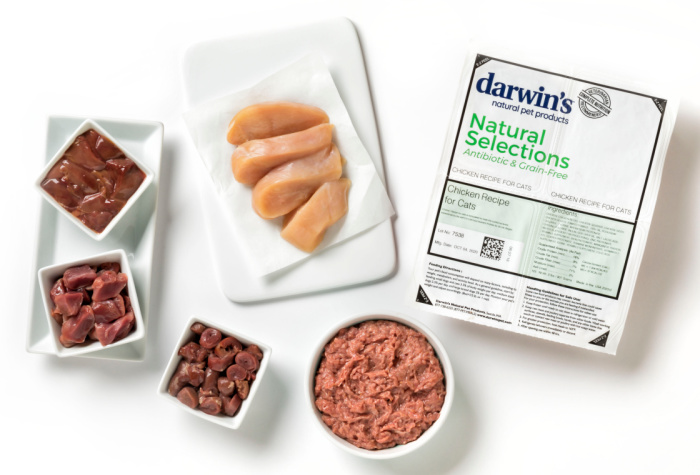
About Darwin’s Natural Pet Food
Darwin’s is doing everything right, both in terms of what’s in the food and what’s not:
- 100% meat – no animal-by-products or fillers
- Ethically sourced human grade ingredients from farms they trust
- Formulated under the guidance of veterinary nutritionists
- Free range, pasture raised, cage-free meats
- No GMO
- No steroids
- No hormones
- Made fresh: you will receive your meals 4-6 weeks from production
- Ready to serve
Delivered right to your door
Darwin’s is packed in eco-friendly packaging with dry ice to ensure that food is shipped and delivered safely. The packaging can be recycled or composted. They offer a convenient autoship schedule so you’ll never have to worry about running out of food. The timing of delivery is flexible, and Darwin’s friendly customer service team will gladly adjust your schedule as needed.
Feeding Darwin’s is as easy as opening a can
The food come packaged in convenient 8 ounce sealed packs. It takes about 24 hours for one pack to thaw in the refrigerator, so feeding is no harder than feeding canned food. The only difference is that instead of opening a can, you’re defrosting a pack of food.
Special offer: Get 50% off your first 10 pounds
Darwin’s has an introductory offer that can’t be beat so you can try this for your own cats: get 50% off your first 10 pounds of raw food. You can customize the proteins depending on your cat’s taste preferences.
Use code PURRSOFWISDOM to take advantage of this special offer.
For more information and to order, please visit DarwinsPet.com.
Darwin’s statement on H5N1:
Darwin’s is very selective in choosing which suppliers we work with. We have been in contact with our poultry suppliers who all have testing protocols in place for a range of viruses, including H5N1, and will not ship products from flocks in which even one bird tested positive. In addition, as part of Darwin’s normal production process, all our meals are treated with an organic Peracetic Acid solution, which is effective against multiple pathogens, including H5N1.
If you are concerned about feeding raw, cooking poultry to a temperature of 165° Fahrenheit will destroy H5N1. Sous viding is the gentlest option that retains the most nutrients. Since sous viding is not always accessible for all pet parents, we also recommend very gently sauteing Darwin’s. This should be low and slow, and all liquid rendered from the cooking process should be served with the food. The food should be completely cooled before serving.
*This post is sponsored by Darwin’s Natural Pet Products. Purrs of Wisdom is an affiliate partner of Darwin’s Natural Pet Products. This means that if you decide to purchase through any of our links, we get a small commission. We only spread the word about products and services we’ve either used or would use ourselves.
Image Adobe Stockphoto

Thanks for this info on Darwins. I had tried to find this on their site but was unsuccessful. It’s a great company; I hope they get through this hard time.
I sure hope they will get through this, too. They are such a wonderful company.
After feeding Darwin’s Turkey to my cats for several years, I’ve made the decision to go back to high-quality, grain-free canned food. This is partly due to H5N1 concerns in terms of transmission, but a longer-term concern over supply chain issues. Already, the price of eggs has sky-rocketed (some say supply chain, others say corporate greed masquerading as supply chain concern), and I am worried that poultry products in general will become less available. I have tried Darwin’s non-poultry formulas, but my cats are not fans of beef and lamb. I am hoping they will remember that they once loved Instinct’s Rabbit.
I am concerned about supply chain issues too, Catherine.
We do good keeping bad things away from our cats, but this weekend, I had a big concern about the stray cats I feed. A neighbor’s car came home on a tow truck and the hydrolic system on the tow truck failed and all the fluid leaked on the road in front of my house and one neighbor’s. I had to call for a hazardous fluid cleanup, but it still took a little while for them to come out. Luckily the cats seem ok, so I guess they didn’t get in it. They go between my house and one across the street for food, so they are always crossing the road.
I’m glad the strays you feed are okay, Janine. I would have been very worried, too!
There was a recall on Darwin’s because cats were getting sick and some died. Many years ago I used to feed Darwin’s to my dogs. The meals disappeared and then only treats were available. I have not even seen the treats lately. I did not know all of theses things that could cause problems with cats. I know about some of them as dogs have some of the same issues. I do not use scented candles or ones that have essential oils. I don’t use air freshers. I watch what plants I have or that my dogs have in their reach. However, since cats go more places by jumping, I would have to remove many of my plants.
You are correct that Darwin’s had a recall for possible salmonella and listeria contamination in September of last year, but there’s a lot of controversy about testing protocols for these recalls. Darwin’s never received any complaints about the recalled lots. “”It is important to know that, per the FDA, Salmonella and Listeria are not typically harmful to pets,” stated the memo. “Nonetheless, these product lots were flagged under the FDA’s zero-tolerance policy, which is largely designed for human safety and for food that humans will consume, not pets. In fact, the products tested positive for these bacteria only following an incubation period of multiple weeks; it was not detectable using conventional testing methods and third-party testing for all lots negative for listeria.” Source: https://www.petfoodindustry.com/safety-quality/news/15684471/darwins-natural-selections-raw-pet-food-tests-positive-for-salmonella-and-listeria
Good morning Thank you for keeping us inform.
You’re welcome, Darlene!