
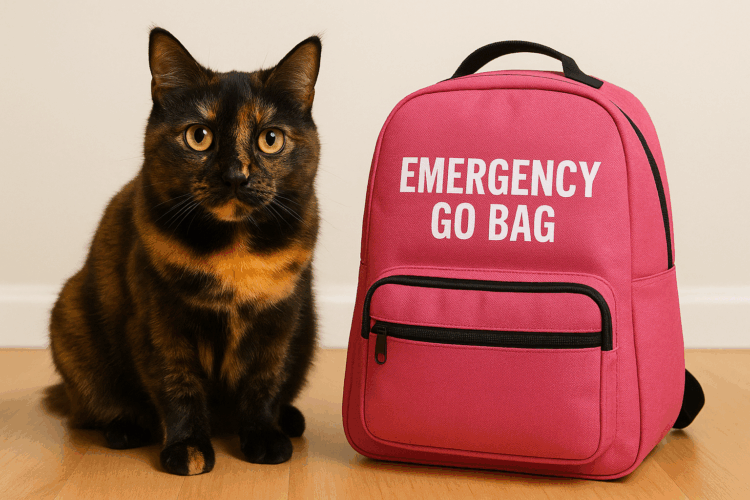
The frequency of natural disasters is increasing at alarming rates. Wildfires, floods, hurricanes, tornadoes, blizzards: any of these may force you to leave your home on short notice. Having an emergency plan that includes both human and feline family members in place is crucial to ensuring the safety of your cats when the unexpected happens.
Cats are creatures of routine. Having their normal environment disrupted will result in stressed out cats that may end up hiding at the worst possible time. The thought of having to leave a beloved cat behind in an emergency is more than any of us can bear. If you don’t already have an emergency plan in place, the following tips can help you get started.
Assemble an emergency go bag
Do you have an emergency go bag for yourself and the human family members in your household? Just like humans, cats need basic supplies in an emergency. Prepare a pet-specific emergency kit that is easy to grab and includes:
- Food and water: At least a 3 to 7-day supply of food and bottled water.
- Bowls: Disposable or lightweight bowls for feeding and drinking.
- Litter and litter box: Portable, disposable litter boxes and a small bag of litter. Amazon and Chewy are good sources for both.
- Medications: A week’s supply of any medications your cat needs, along with instructions.
- Medical records: Copies of your cat’s medical records and contact information for your veterinarian.
- Carrier: A secure, comfortable carrier large enough for your cat to stand and turn around.
- Comfort items: Familiar toys or a blanket to help reduce stress.
- Photo and ID: Recent photos of your cat and copies of their microchip and identification info.
Create positive associations with your cat’s carrier
Train your cat to accept being in the carrier long before there is an actual emergency. Most cats only go into their carrier when it’s time to go visit the vet and as a result, they have a negative association with it.
Leave carriers in easily accessible locations where your cats spend time, and make them attractive to your cat by using treats or food, or by creating cozy napping spots. Some carriers double as comfortable beds, making them ideal for emergency situations. By making carriers are regular part of your cat’s environment, she is much more likely to go into a carrier without fuss during an emergency.
Make sure you have one carrier for each cat. Since your cat may spend a considerable amount of time inside the carrier during an emergency, carriers should be large enough for your cat to be able to comfortably stand and turn.
It is generally not a good idea to put more than one cat inside a carrier. Even if your cats are comfortable being with each other, in an emergency, they will be stressed, which can lead to uncharacteristic behavior, including aggression.
Label the carriers with your cat’s name, your contact information, and any other pertinent information (for example, medication your cat may need).

Have an evacuation plan
Don’t wait until the last minute to decide how you’ll evacuate with your cat.
- Know your routes: Familiarize yourself with local evacuation routes and shelters.
- Locate pet-friendly shelters and hotels: Not all emergency shelters accept pets. Identify nearby hotels, shelters, or friends’ homes that can accommodate you and your cat.
- Practice evacuation: Train your cat to enter the carrier calmly, and practice evacuating with them to reduce panic during a real emergency.
Ensure your cat has proper identification
If you and your cat become separated during an emergency, proper identification greatly increases the chances of being reunited.
- Microchip: Ensure your cat is microchipped and that the contact information is up to date.
- Collar and tag: Use a breakaway collar with a tag that includes your phone number and any relevant medical needs.

Have a communication plan
- Emergency contacts: Have a list of emergency contacts and share them with your friends. Share you evacuation plan with your emergency contacts, especially if they may need to care for your cat in your absence.
- Vet contact info: Keep your veterinarian’s contact information handy and stored in your phone and emergency kit.
- Make sure that all members of the household are familiar with the evacuation plan. It can be helpful to designate a meeting area outside the home if communications are disrupted and you become separated.
- Never evacuate without your cat, even if you think you may only be gone for a short time. Emergencies, by their very nature, are unpredictable, and you may not be able to get back to your home as quickly as you thought.
- Have a list of neighbors or friends who can rescue your cat if you are unable to get back to your home.
- Place emergency stickers on doors and windows. These stickers can alert emergency personnel to the fact that there are cats inside the home. They are available online or from your local fire department.
Being proactive in preparing for emergencies can mean the difference between chaos and calm when the unexpected occurs. By assembling a pet emergency kit, planning for evacuation, and securing proper identification, you’re taking essential steps to protect your feline family members.
Image generated by ChatGPT


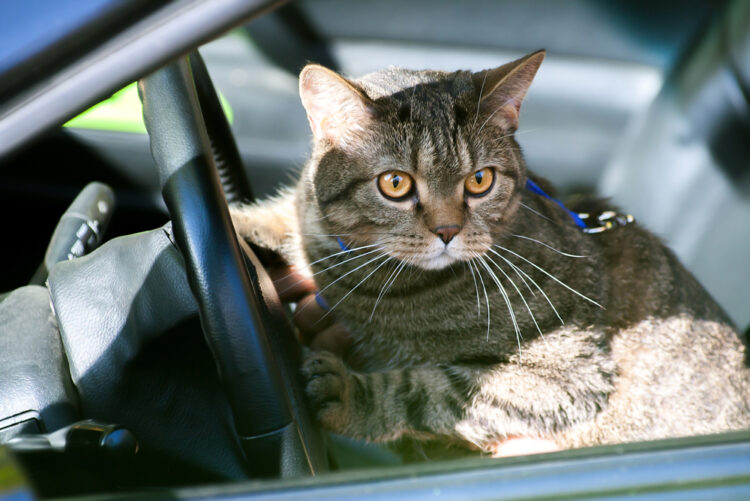

Between hurricanes, earth quakes and wild fires, I am starting to assemble things together for the Go Bags.
This is great information. Thank you for posting it. One thing I never thought about is records of their microchip numbers.