
This is a sponsored post*
Feline body language is a rich, nuanced system of communication that tells us how a cat is feeling in any given moment. Learning to read it doesn’t just deepen our bond with our cats; it also helps prevent stress, fear, and even aggression. When we understand what our cats are telling us with their bodies, we can respond in ways that make them feel safe, respected, and understood.
What is feline body language?
Feline body language is a combination of posture, movement, facial expression, and vocalization that cats use to communicate their emotional state and intentions. Unlike dogs, who often exaggerate their signals, cats are more subtle. A flick of the tail, a subtle ear rotation, or a shift in body weight can completely change the meaning of an interaction.
Cats use body language to communicate with other cats, with humans, and even with other species. Much of it is instinctive, rooted in their evolution as both predator and prey. Because of that dual role, cats are masters at signaling discomfort long before they feel the need to defend themselves, which is why it’s important to know what to look for.
The tail: expressive, but often misunderstood
A tail held upright, especially with a slight curve at the tip, is a friendly greeting. This is a confident, relaxed cat who feels safe in their environment. If your cat approaches you with this tail position, it’s an invitation to interact.
A slowly swaying or gently moving tail often means your cat is focused or mildly stimulated. This isn’t necessarily a bad thing, but it’s a sign to pay attention to the rest of the body for context.
A rapidly lashing or thumping tail is a clear warning sign. It indicates irritation, frustration, or overstimulation. In dogs, a wagging tail is a positive sign, which is why a cat’s moving tail is often misinterpreted.
A puffed-up tail signals fear or high arousal. The cat is trying to make himself look larger in response to a perceived threat.
The ears: tiny movements send big messages
Ears facing forward generally indicate interest or relaxation. This is what you’ll see when cats are calmly observing their environment or engaging in gentle play.
Ears turned sideways or slightly flattened, sometimes described as “airplane ears” suggest uncertainty, irritation or discomfort. Consider this an early warning sign.
Ears pinned flat against the head indicate fear, anxiety, or aggression. At this point, the cat is preparing to defend herself if necessary.
The eyes: a window into your cat’s emotional state
Cat eyes communicate emotion through shape, movement, and blinking.
Soft, relaxed eyes with normal pupils indicate a calm cat. The slow blink, also called the “I love you blink,” is one of the clearest signs of trust and affection. Returning the slow blink is a wonderful way to strengthen your bond.
Dilated pupils can mean excitement, fear, or stress, depending on the context. During play, dilated pupils may simply reflect arousal and enthusiasm. In a tense situation, however, they often signal fear or overstimulation.
A hard stare, especially when combined with stiff posture, is a sign of discomfort or a challenge. Cats generally avoid prolonged direct eye contact unless they feel threatened.
Body posture: tying all the other signals together
A relaxed cat typically has loose muscles, a neutral posture, and fluid movement. They may stretch out, expose their belly, or curl up comfortably. Most cat parents are aware that exposing the belly is not always an invitation to touch. Watch for other cues before you give in to the temptation!
A tense cat will appear rigid, crouched, or compressed. Her weight may be shifted low to the ground, ready to flee or react.
An arched back with fur standing on end is a classic fear response and an immediate precursor to aggression. This posture makes the cat look larger and more intimidating, signaling that they feel threatened.
Rolling onto the back can mean trust, playfulness, or defensive readiness, depending on the rest of the body language.
Whiskers and face: subtle but important
Relaxed whiskers rest naturally to the side. Whiskers pushed forward indicate interest or excitement, often seen during play or hunting. Whiskers pulled tightly back against the face suggest fear or stress.
Facial tension, a tight mouth, flattened whiskers, and/or narrowed eyes can be an indicator of pain. Cats in pain often become very still and withdrawn.

Context is everything
No single signal exists in isolation. A swishing tail during play means something very different from a swishing tail during petting. Always look at the entire picture: environment, interaction, and the cat’s individual personality.
One of the most important lessons in reading feline body language is recognizing early signs of discomfort and responding appropriately. This may mean giving your cat space, ending an interaction, or adjusting how you engage with her. When we respect these signals, cats learn that they don’t need to escalate to growling, hissing, or biting to be heard.
Cats are not aloof or inscrutable. They are expressive, sensitive beings who are constantly telling us how they feel. The more you observe your cats without judgment or assumptions, the better you’ll become at recognizing their unique patterns of communication. When we learn their language, we don’t just become better cat parents, we also strengthen the love between our cats and us. And ultimately, isn’t that what it’s all about?

About Darwin’s Natural Pet Food
Darwin’s is doing everything right, both in terms of what’s in the food and what’s not:
- 100% meat – no animal-by-products or fillers
- Ethically sourced human grade ingredients from farms they trust
- Formulated under the guidance of veterinary nutritionists
- Free range, pasture raised, cage-free meats
- No GMO
- No steroids
- No hormones
- Made fresh: you will receive your meals 4-6 weeks from production
- Ready to serve
Delivered right to your door
Darwin’s is packed in eco-friendly packaging with dry ice to ensure that food is shipped and delivered safely. The packaging can be recycled or composted. They offer a convenient autoship schedule so you’ll never have to worry about running out of food. The timing of delivery is flexible, and Darwin’s friendly customer service team will gladly adjust your schedule as needed.
Feeding Darwin’s is as easy as opening a can
The food come packaged in convenient 8 ounce sealed packs. It takes about 24 hours for one pack to thaw in the refrigerator, so feeding is no harder than feeding canned food. The only difference is that instead of opening a can, you’re defrosting a pack of food.
Special offer
60% off your first box
(up to $100)
Use code PURRSOFWISDOM
You can customize the proteins depending on your cat’s taste preferences. Valid for new customers only, good through December 1.
For more information and to order, please visit DarwinsPet.com.
Image Depositphotos

*This post is sponsored by Darwin’s Natural Pet Products. Purrs of Wisdom is an affiliate partner of Darwin’s Natural Pet Products. This means that if you decide to purchase through any of our links, we get a small commission. We only spread the word about products and services we’ve either used or would use ourselves.
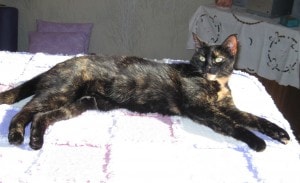
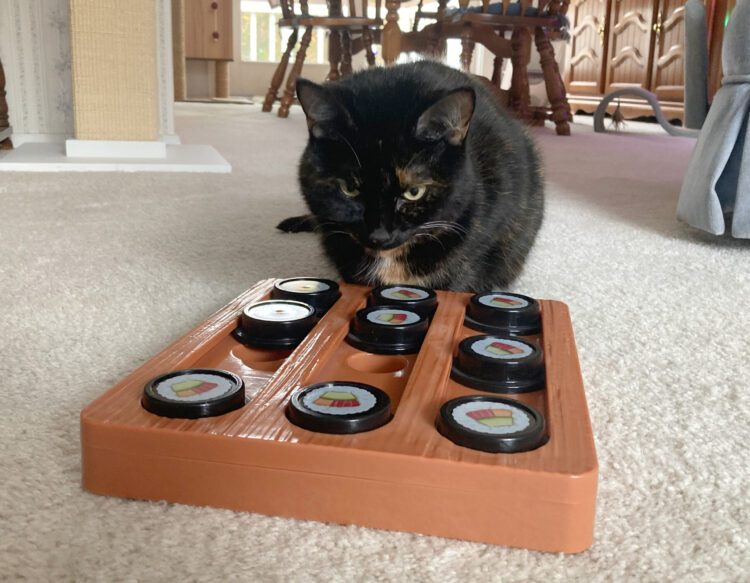
Miss Lulu has the most expressive tail of any cat I have ever known. From the minute she came into our house, she held her tail high and was happy.
Awww, I love that! Nothing better than a happy tail.