
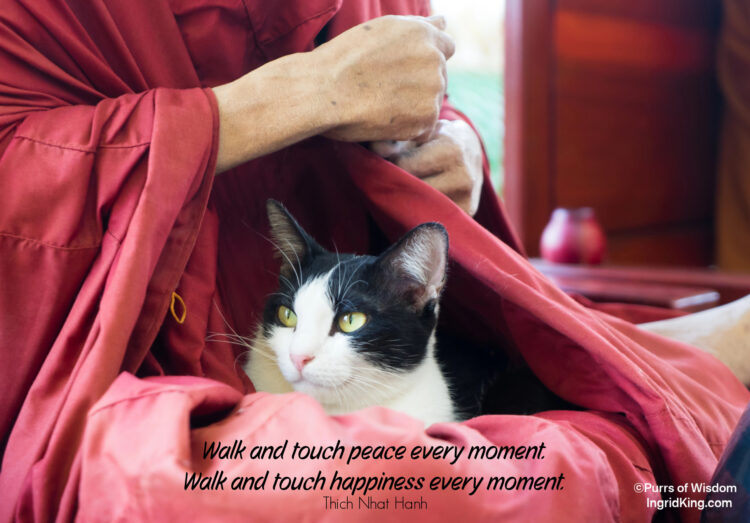
I previously wrote about how deeply the venerable monks on the Walk for Peace affected me, and how I made changes in my life as a result of the message they conveyed during their walk.
I visit their Walk for Peace Facebook page every day. Their posts are ongoing lessons in the Dhamma, the teachings of the Buddha, focusing on mindfulness, kindness and compassion. Tue, lasting peace starts from within each person. By maintaining peace within ourselves, it spreads to others. The way to achieve this peace is through mindfulness.

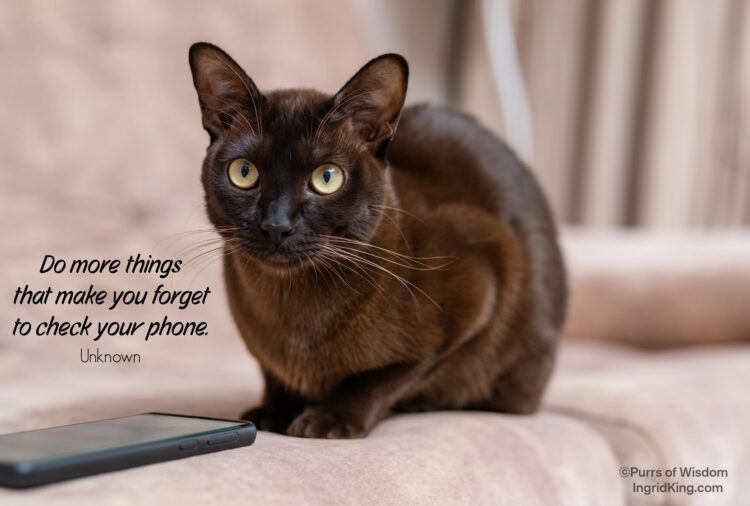
One aspect of this mindfulness is to rethink how we use our cell phones. In his early Dhamma talks, the Venerable Bhikkhu Pannakara humorously used the term “lover” for cell phones to illustrate just how attached most of us are to our phones. The average American picks up their phone 186 times a day. 80% of people check their phone within 10 minutes of waking. I’ve certainly been guilty of picking up my phone shortly after I wake up. I’m hoping that I didn’t pick it up 186 times a day, but some days, I probably came close.
I’ve since made changes. I don’t touch my phone until after I’ve fed Allegra, had my coffee, meditated and had breakfast. That’s about 2 hours after I first get up. And I put it out of reach after dinner when I sit down to watch TV so I’m not tempted to continue to check email or social media. As a result, I’ve been sleeping better, and my days start out more peaceful.
The Walk for Peace page recently posted a wonderful lesson on how we can all find more peace in our digital world, and I would like to share it with you here. As is the case with all their teachings, the lessons are conveyed with a gentleness and lightness that feels like a warm hug to me.

Touching Peace in the Digital World
In our busy lives, we often reach for our phones or screens to escape from ourselves. We think we’re just passing time, but what we consume—the feeds and endless scrolling—becomes “food” for our consciousness, nourishing or poisoning our minds in ways we don’t always notice.
Just as we wouldn’t knowingly eat toxic food, we can learn not to consume digital content that fills us with anxiety. Our devices don’t have to be sources of distraction; with gentle awareness, we can transform them into tools that support our peace.
When the phone rings, we can treat it as a bell calling us back to the present. Instead of rushing to answer, let it ring while you take three conscious breaths—breathing in peace, breathing out tension, and centering yourself before you engage. When we speak or text, remember that words travel far. May our words create understanding, helping to heal rather than harm.
When we open a laptop, we can pause and set an intention. It is easy to fall into mindless clicking in such a vast space. We can ask ourselves: “Is what I’m about to consume nourishing my compassion, or feeding something that makes me suffer?”
On social media, remember our minds are like screens with thousands of channels. We choose what we consume. If we choose content that is tranquil and kind, our peace stays fresh. This doesn’t mean avoiding the world; it means choosing consciously and protecting the peace within us so we have the strength to engage without being overwhelmed.
Try this today: Next time your phone vibrates, don’t rush. Breathe. Smile gently. The message will still be there after three conscious breaths, but you will meet it with more presence. When we use technology mindfully, we stop borrowing from our peace and start contributing to a world where our digital interactions become opportunities for compassion.
May we all find a balance that lets us stay connected without losing ourselves.
(Credit: Walk for Peace)
My wish for you is that this helps you re-evaluate how you use your phone and perhaps inspire you to make some changes so you can have a more peaceful life.

And if you need convincing, just look to your cats. Their lives are so much more peaceful than ours, maybe because they don’t have phones, but probably mostly because they live in the present moment.

My husband reminds me when I am on my phone too much. It does becomes a bad habit looking at it all the time.