This is a sponsored post*
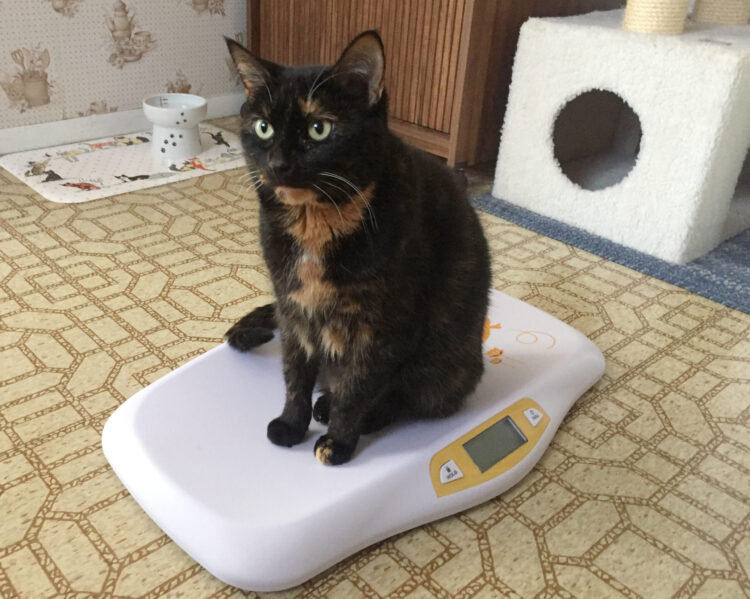
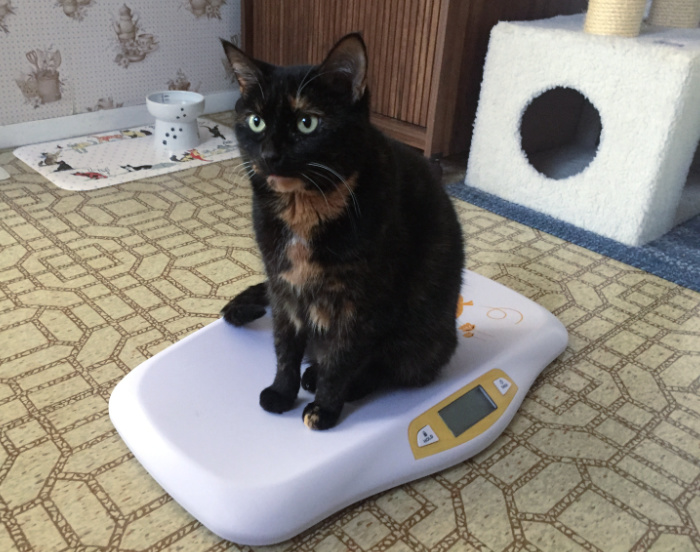
Did you know that your cat’s weight is one of the most important clues to her state of health? Weight loss can be subtle, and if it happens gradually it can be difficult to recognize unless you weigh your cat regularly. But even when weight loss is visible, what you’re actually seeing may not be weight loss. It may be muscle loss.
The distinction matters because muscle loss in cats is often an early warning sign that something isn’t right. It can point to underlying disease, chronic pain, inadequate nutrition, or age-related changes that deserve closer attention. Unfortunately, it’s also easy to miss until it becomes fairly advanced.
The difference between weight loss and muscle loss
Weight loss simply means a decrease in overall body weight. That can include fat loss, muscle loss, or both.
Muscle loss, also called muscle wasting or muscle atrophy, specifically refers to the loss of lean muscle tissue.
A cat can lose fat while maintaining muscle, lose muscle while maintaining overall body weight, or lose both muscle and fat simultaneously. This is why the scale only tells part of the story.
Muscle loss can be subtle at first
Most cats don’t suddenly look dramatically thin overnight. Muscle loss tends to happen gradually.
You may notice that the spine feels more prominent when you pet your cat. Hips or shoulder blades may seem bonier. The back legs may look thinner. Your cat just feels less solid when you pick her up. You may also notice a lack of confidence in jumping on places that your cat used to easily scale.
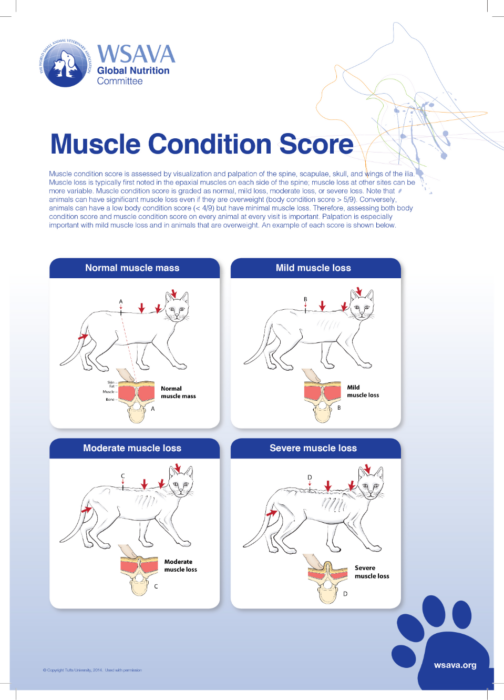
One of the first places veterinarians often notice muscle loss is along the spine. In a cat with healthy muscle tone, there’s a layer of muscle on either side of the backbone. As muscle wasting develops, the spine becomes easier to feel and more visually noticeable.
Many people assume this is simply part of aging. While some loss of muscle mass can occur in older cats, significant muscle wasting should never automatically be dismissed as “just getting old.”
Why senior cats are at higher risk
Older cats are prone to muscle loss because aging bodies become less efficient at maintaining lean muscle tissue. But aging itself is usually only part of the picture.
Senior cats are also more likely to develop conditions associated with muscle wasting, including:
- chronic kidney disease
- hyperthyroidism
- diabetes
- gastrointestinal disease
- dental disease
- cancer
- arthritis and chronic pain
Pain is an especially important and often overlooked cause. For example, cats with arthritis frequently reduce their activity levels long before anyone notices overt limping. Less movement means less muscle maintenance, particularly in the hind limbs. Because cats are so good at hiding discomfort, muscle loss may become one of the earliest outward signs that something is wrong.
Nutrition plays a major role
Cats are obligate carnivores, which means maintaining muscle mass depends heavily on adequate protein intake. As cats age, they may become less efficient at utilizing dietary protein. At the same time, many senior cats may eat less due to nausea, dental pain, reduced appetite, stress, or underlying illness. The result can be gradual muscle wasting, even in cats who still appear to be eating reasonably well.
Appetite alone is not a reliable indicator of health in cats. A cat may continue eating regularly, maintain a stable weight, and still be losing important muscle mass. In overweight cats, muscle loss can actually be masked by excess body fat, making it even harder to recognize.

Why muscle loss matters
Lean muscle tissue is closely tied to mobility, balance, resilience, and overall quality of life. Cats with significant muscle wasting may experience:
- weakness
- difficulty jumping or climbing
- decreased stability
- reduced mobility
- greater frailty
- more difficulty recovering from illness
Muscle loss often becomes self-perpetuating. Cats who feel weak move less, and moving less accelerates further muscle loss. The earlier the problem is recognized, the better the chances of slowing progression and improving quality of life.
What cat parents should watch for
One of the best things you can do is become familiar with your cat’s normal body condition and muscle tone. Feel along your cat’s spine and hips periodically. Pay attention to changes in mobility or activity. Monitor body shape, not just weight.
How to treat muscle loss
If muscle loss is identified, the next step is determining the underlying cause. Depending on the situation, treatment may involve:
- managing underlying disease
- improving pain control
- addressing dental problems
- adjusting nutrition
- increasing protein intake when appropriate
- treating nausea or poor appetite
- encouraging gentle activity and movement
Weight loss tends to get attention because it’s easier to notice. Muscle loss is quieter, subtler, and often more clinically significant.Paying attention to muscle condition can help identify health problems earlier and help cats maintain better mobility, comfort, and quality of life as they age.
*This post is sponsored by Darwin’s Natural Pet Products. Purrs of Wisdom is an affiliate partner of Darwin’s Natural Pet Products. This means that if you decide to purchase through any of our links, we get a small commission. We only spread the word about products and services we’ve either used or would use ourselves.
About Darwin’s Natural Pet Food
Darwin’s is doing everything right, both in terms of what’s in the food and what’s not:
- 100% meat – no animal-by-products or fillers
- Ethically sourced human grade ingredients from farms they trust
- Formulated under the guidance of veterinary nutritionists
- Free range, pasture raised, cage-free meats
- No GMO
- No steroids
- No hormones
- Made fresh: you will receive your meals 4-6 weeks from production
- Ready to serve
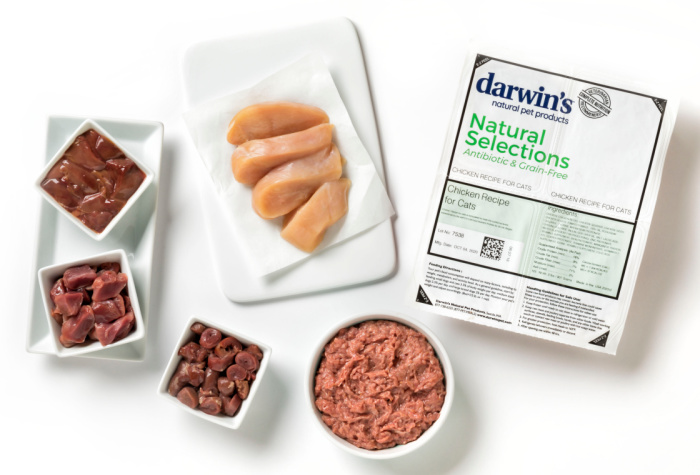
Delivered right to your door
Darwin’s is packed in eco-friendly packaging with dry ice to ensure that food is shipped and delivered safely. The packaging can be recycled or composted. They offer a convenient autoship schedule so you’ll never have to worry about running out of food. The timing of delivery is flexible, and Darwin’s friendly customer service team will gladly adjust your schedule as needed.
Feeding Darwin’s is as easy as opening a can
The food come packaged in convenient 8 ounce sealed packs. It takes about 24 hours for one pack to thaw in the refrigerator, so feeding is no harder than feeding canned food. The only difference is that instead of opening a can, you’re defrosting a pack of food.
Special offer
60% off your first box
(up to $100)
Use code PURRSOFWISDOM
You can customize the proteins depending on your cat’s taste preferences.
For more information and to order, please visit DarwinsPet.com.
Image Depositphotos
Interesting article. I was wondering if you would recommend a couple books, specifically about/ for Senior Cats. My cats are turning 10 years old and I’m looking for good reading to help us be healthy and happy.
I’ll take a look and see what’s out there, Sue.
Hi Sue! Sorry it took me so long to come up with some recommendations for senior cat care books. I consider Amy Shojai’s book the “bible” of senior cat care https://amzn.to/3QDPbqJ It’s a few years old but has been updated, and is still the best book on the topic.
Thank you! I read quite a few books on senior dogs when mine was aging. My favorite was “Forever Dog” by Rodney Habib and Dr. Karen Becker. So I figured there had to be books authored about senior cats. My cats are about 10 years old. I’m interested in all the various aspects of graceful aging. If any good books on the senior cat topic come across your way, please recommend again.
Will do!
I always thought muscle loss was just part of aging. Thank you for this post today. I learned a lot from it.