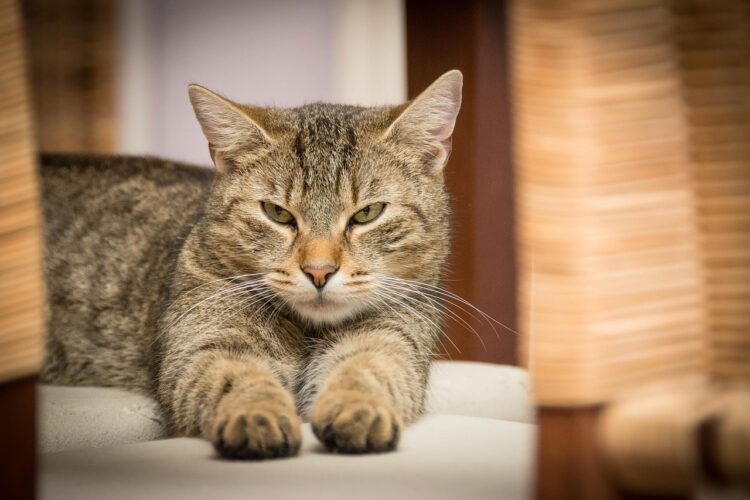
Like most cats, Allegra loves her routines. She has certain nap spots that she prefers at different times of the day. She likes her meal times to be consistent. If she was human, we’d say she’s set in her ways. And whenever she changes her routine even just a little, I pay attention and make sure that it’s just one of her many adorable little quirks, and not an indicator of something serious.
Cats thrive on routine
Cats are creatures of habits who thrive on routine. Most cats will have a set pattern they follow every day. Their routines will usually develop around their human’s schedule and household routines. While such a routine driven life may seem boring to us, it helps cats feel safe and confident. In fact, routines are so important to cats that having them disrupted can even impact their physical health.
As cats age, their habits and routines may become more pronounced. Maybe your once athletic climber now prefers the middle shelf instead of the top of the cat tree. Perhaps she’s claimed the warmest spot in the house for afternoon naps, or become even more opinionated about when dinner should be served.
Those changes are often simply part of growing older. But sometimes, your senior cat may develop a brand new behavior that seems completely out of character.
One of the earliest signs of illness in senior cats is often a subtle change in behavior rather than any obvious physical symptom. The challenge is determining when a new quirk is simply part of normal aging and when it’s your cat’s way of telling you something isn’t right.

Is it normal for senior cats to change as they age?
The answer is yes, but only up to a point.
Healthy aging can bring gradual changes. You might notice that your older cat sleeps more, can’t reach previously favorite spots that are higher up, and plays in shorter bursts. These changes usually happen gradually over months or even years. Your cat is adapting to an aging body while still enjoying life.
When a behavior change isn’t just old age
One of the biggest misconceptions about senior cats is that personality changes are simply something we should expect. Cats don’t suddenly become grumpy, withdrawn, clingy, or anxious for no reason. Behavior changes almost always have an explanation.
A cat who suddenly dislikes being picked up may be living with arthritis. A formerly independent cat who begins following you everywhere may have declining vision or hearing and feel safer knowing where you are. A social cat that starts hiding may be uncomfortable, stressed, or not feeling well. A cat who suddenly becomes unusually vocal may not be “senile.” She may be trying to communicate pain, confusion, or another medical problem.
Whenever your cat develops a new habit that feels unlike them, it’s worth paying attention.
Senior cat behavior changes that should never be ignored
If you notice any of the following changes, it’s time for a veterinary visit:
- Increased vocalizing, especially at night
- Missing the litter box after years of good habits
- Drinking noticeably more water
- Changes in appetite
- Weight loss
- Hiding more than usual
- Restlessness or pacing
- Appearing confused
- Staring at walls or into corners
- Sleeping dramatically more or less
- Difficulty jumping
- Grooming less
- Aggression or irritability
None of these behaviors automatically mean your cat is seriously ill, but they shouldn’t be dismissed as “just getting old”.
Common medical conditions behind new quirks
Many health conditions become more common as cats age, including arthritis, kidney disease, hyperthyroidism, diabetes, high blood pressure, vision and hearing loss, and cognitive dysfunction. The good news is that many of these conditions can be treated or successfully managed, especially when they’re recognized early.
Arthritis in older cats often goes undetected
Recognizing pain in cats can be challenging for even the most dedicated cat parent, especially when it comes to chronic pain caused by arthritis. Even veterinarians often overlook signs of pain in cats, partly because some cats won’t show pain in a stressful situation such as being at the vet’s.
A cat with arthritis may:
- Stop jumping onto favorite furniture.
- Use “stepping-stone” surfaces to reach high places.
- Sleep more.
- Groom less because stretching is uncomfortable.
- Hesitate before jumping.
- Become irritable when touched around painful joints.
Because these changes happen gradually, they’re often mistaken for normal aging when in reality they may be signs of chronic pain. Fortunately, veterinary medicine has made tremendous progress in recognizing and treating feline arthritis, helping many senior cats stay comfortable and active.

Litter box problems are often medical, not behavioral
One of the most frustrating changes cat parents experience is elimination outside the litter box. I purposely didn’t use the common term “inappropriate elimination,” because from the cat’s perspective, there’s always an appropriate reason for it, and it’s up to cat parents to figure out what that might be.
Causes can include arthritis making it painful to climb into a high-sided litter box, or increased urine production caused by kidney disease or diabetes making it harder to reach the box in time. Constipation, urinary tract disease, bladder inflammation, hyperthyroidism, and feline cognitive dysfunction can all contribute to litter box accidents.
Why is my senior cat crying at night?
Nighttime vocalization is one of the most common concerns of parents of older cats. While feline cognitive dysfunction is one possible explanation, it’s far from the only one. Pain, high blood pressure, hyperthyroidism, hearing loss, declining vision, anxiety, and kidney disease can all contribute to increased nighttime meowing.
That’s why a thorough veterinary examination is so important before assuming your cat is simply experiencing age-related cognitive decline.

Trust your observations
You know your cat best. You notice when she stops greeting you at the door. You notice when he no longer sleeps on the windowsill. You notice when your enthusiastic eater suddenly leaves food behind, or when your picky eater suddenly can’t seem to get enough.
These observations of subtle changes often provide the first clue that something has changed. If your instincts tell you your cat isn’t acting like themselves, don’t dismiss those feelings simply because they’re getting older.
Thanks to advances in nutrition, veterinary medicine, and preventive care, cats are living longer than ever before. Regular wellness examinations, blood work, blood pressure screening, dental care, weight monitoring, and pain assessments help detect many age-related diseases long before they become emergencies.
Growing older should never mean accepting pain or poor quality of life as inevitable. Our goal isn’t simply to help our cats live longer. It’s to help them continue enjoying sunny windows, afternoon naps, bird watching, favorite treats, and quiet evenings curled up beside the humans they love.
The next time your senior cat develops a new little quirk, resist the temptation to write it off as “just old age.” Sometimes it’s simply another chapter in the natural aging process, but other times, it’s your cat’s gentle way of asking for help.
Image by Gerhard Bögner from Pixabay


Pele was crying at night and that was our unusual change that prompted us to seek help from the vet. She had gotten where she didn’t like being picked up, so we gave up trying. Her weight loss was hidden by her long fur. She was still eating, but not as much. So we didn’t rush her in for that symptom. By the time we got her to the vet, he said she had cancer and by the looks of it, she didn’t have much time left. She didn’t even fight going into the carrier or at the vet. Normally, she was near impossible just getting her into a carrier. At her age, we didn’t want to do any surgeries or treatments, so we made the decision to send her to dreamland.
I know how hard it was for you to let her go, Janine. Hugs to you!