Have you noticed your black cat developing rust colored patches on her coat? Does your tabby look paler than he used to? Coat color changes can be a normal part of aging, but in some cases, they can also signal an underlying health issue. In this article I take a look at what’s normal aging, and what may be cause for concern.
Just like humans, cats can go gray
Senior cats can develop white or gray hairs as they age. Unlike humans, most cats don’t become dramatically grey. The changes are often subtle and may be most noticeable around the face, especially around the muzzle, eyes, and ears. The process is similar to what happens in people: pigment-producing cells gradually become less active over time.
Sun exposure can fade dark coats
Is your cat a sun worshipper? If she spends a lot of time lounging in sun puddles or near sunny windows, you may notice that a black coat starts to take on a reddish-brown or rusty appearance. Ultraviolet light can gradually bleach the pigment in the hair shaft, causing dark fur to fade. This type of color change is generally harmless and is most often seen on areas of the body that receive the most sunlight, such as the back and sides.
The influence of nutrition on coat color
A healthy coat depends on proper nutrition. Deficiencies in certain nutrients, particularly the amino acid tyrosine, can affect coat pigmentation.
Tyrosine is essential for producing melanin, the pigment responsible for coat color. In black cats, inadequate tyrosine intake may cause the coat to appear reddish or brown rather than deep black. Fortunately, this is uncommon in cats eating a complete and balanced diet. It is more likely to occur in cats fed homemade diets that are not properly formulated or in cats with medical conditions that interfere with nutrient absorption.
Medical conditions can affect coat color
Several health problems that become more common in older cats can affect the appearance of the coat, including:
- Hyperthyroidism
- Liver disease
- Kidney disease
- Nutritional deficiencies
- Chronic gastrointestinal disorders that impair nutrient absorption
In these cases, color changes are often accompanied by other coat abnormalities, such as dullness, excessive shedding, a greasy texture, or poor grooming habits.
Certain medication can affect coat color
Although relatively rare, some medications can contribute to changes in coat color or coat quality. Long-term use of certain drugs may alter pigment production, affect hair growth cycles, or change the texture and appearance of the coat.
Prednisolone, a corticosteroid frequently prescribed for cats with inflammatory conditions, allergies or immune-mediated diseases, has been associated with coat changes in some cats, including thinning fur, changes in coat texture, and occasionally fading or lightening of coat color.” My cat BC, who was on prednisolone from age 3 until she died at 17 was completely reddish bronze in her old age,” says Dr. Andrea Tasi, a feline veterinarian and owner of Just Cats, Naturally. “She was jet black in her youth.”
Chemotherapy medications can also sometimes affect fur pigmentation or texture as the coat regrows. In some cases, medications may indirectly influence coat color by affecting hormone levels, metabolism, or nutrient utilization. If you notice a change in your cat’s coat after starting a new medication, don’t stop the medication without consulting your veterinarian. Instead, discuss the change with your veterinarian, who can determine whether it’s a harmless side effect or a sign that further evaluation is needed.

Regular grooming is important
As cats age, arthritis and other mobility issues can make grooming more difficult. A coat that isn’t being maintained properly may appear dull, faded, or uneven in color simply because loose hair, oils, and debris are accumulating. Regular brushing can help keep your senior cat’s coat healthy while also giving you an opportunity to monitor for lumps, bumps, skin changes, or areas of discomfort.
Allegra’s coat changes
Over the last few weeks, Allegra has developed rust colored patches on her flanks, especially on her right side, which prompted my to write this article.
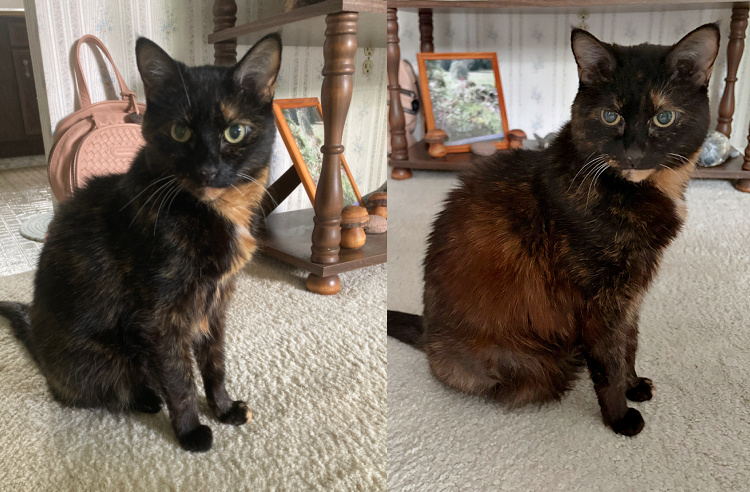
The photo on the left was taken last fall, the one on the right a few days ago. Allegra has been a sun worshipper all her life, so part of the change is probably due to lounging in sun puddles. She’s also been on a low dose of prednisolone for several years, which may also be contributing to the color change.
(On an unrelated and very happy note, you can also see from the two photos that my little girl has regained all the weight she lost when she was struggling with her GI issues!)
If your senior cat’s fur is looking a little different these days, don’t dismiss it. Compare the way she looks now to some older photos, and don’t hesitate to contact your veterinarian if you’re concerned.
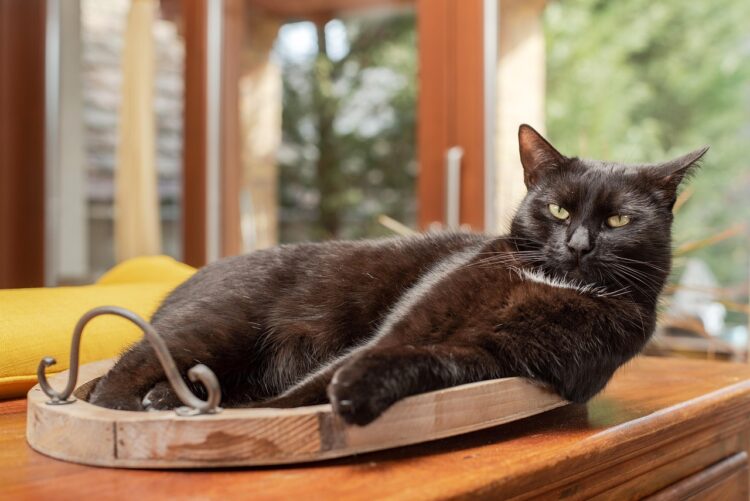
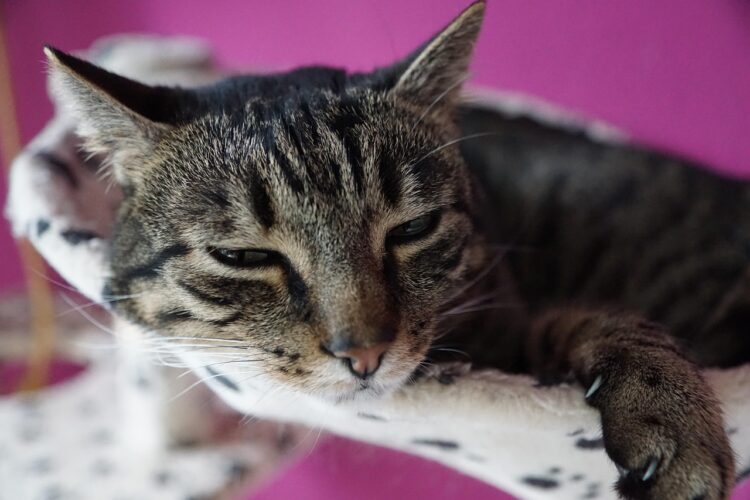
Image at top of post by Eszter Miller from Pixabay


One thing I’ve noticed as my cats age is a change of whisker color. Black whiskers turn white as they move through their senior years. I’ve also had two cats with hyperthyroidism who had noticeable coat issues, mostly hair loss or dull coat, and after having radioactive iodine procedures their coats grew back really thick and beautiful.
Allegra looks beautiful with her rust color side. I am happy to hear she is starting to gain weight again too. I have noticed Kiki is starting to get lighter color tufts of hair right in front of her ears.
Great info! Thanks for posting.