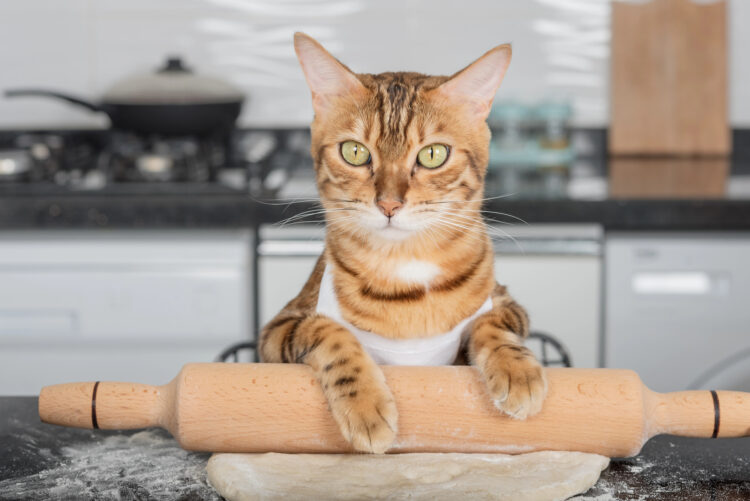
I think kneading, or “making biscuits,” as it’s sometimes called, has to be one of the most adorable feline behaviors. It’s also one of the most misunderstood. In this post, I explain why cats do it, what’s behind the behavior, and when it may indicate a problem.
As is the case with many feline behaviors, kneading goes back to their instincts.
It starts in kittenhood
Newborn kittens instinctively knead their mother’s mammary glands while nursing. The rhythmic pressure helps stimulate milk flow and creates a comforting association between kneading, food, warmth, and safety.
Although adult cats no longer need to nurse, the behavior often stays with them throughout their life. Just as people may find comfort in familiar routines, cats often return to behaviors that made them feel secure as kittens. When your cat kneads your lap, they’re not treating you like their mother. They’re simply expressing that same sense of comfort and contentment they felt back then.
Your cat feels safe with you
One of the biggest compliments a cat can give is to completely let their guard down. Cats are both predators and prey, so they don’t relax unless they feel secure. Kneading usually happens when your cat is calm, comfortable, and enjoying your company. Many cats purr, close their eyes, drool a little, or settle down for a nap after kneading.
In other words, your lap has become a safe place. For cats, that’s high praise.
They’re making the perfect bed
Cats in the wild and outdoor cats often pat down grass, leaves, or other soft materials before lying down. This instinctive behavior creates a comfortable resting place and helps ensure there aren’t any unpleasant surprises hiding underneath. Your blanket, your sweater, or your lap may simply be a preferred sleeping spot.

They’re marking their territory
Cats have scent glands located in the soft pads of their paws. Each time they knead, they leave behind tiny amounts of their unique scent. Humans can’t detect it, but other cats can. Think of kneading as your cat’s subtle way of saying “this is my favorite human.” It’s not so much about claiming ownership, but rather, about familiarity and comfort.
Some cats knead more than others
Some cats make biscuits every time before they settle into a nap. Others only knead during especially relaxed moments. And some rarely knead at all.How frequently your cat kneads, or whether she kneads at all, will depend on her breed, personality, early life experiences, and individual temperament.
The absence of kneading doesn’t mean your cat loves you any less. Cats have many different ways of showing affection.

Does kneading mean my cat was weaned too early?
This is one of the most persistent myths about kneading. While some cats that were separated from their mother early may continue more kitten-like behaviors, there is no evidence that kneading by itself means a cat was weaned too soon.
Many cats who stayed with their mother for an appropriate amount of time continue kneading throughout adulthood. It’s considered a perfectly normal feline behavior.
Little paws come with sharp claws
The downside to kneading for humans is that those sharp little claws can be rather uncomfortable for human laps. Never scold your cat when she’s kneading. If your cat is a kneader, plan ahead. Place a soft blanket over your lap before she settles in. And of course, keeping your cat’s nails trimmed can also make cuddle sessions much more comfortable for both of you.
If your cat becomes overly enthusiastic, gently redirect them onto a nearby blanket or cushion. Don’t push them away abruptly. Remember, they’re trying to show affection.
When is kneading a problem?
For the vast majority of cats, kneading is completely normal and nothing to worry about.
However, if your cat suddenly starts kneading a lot more than usual, seems anxious while doing it, or begins obsessively sucking on blankets or clothing, it may be worth discussing the behavior with your veterinarian. In some cases, excessive comfort-seeking behaviors can be associated with stress, anxiety, or underlying medical issues.
As always, it’s important to look at the whole cat rather than focusing on a single behavior in isolation.
Kneading is one of the many ways cats remind us that they’re wonderfully unique. Whether they’re making biscuits on your lap, fluffing a blanket before settling down, or purring with complete contentment, kneading usually means your cat feels safe, relaxed, and happy in your presence.
Do your cats knead?
Image Depositphotos