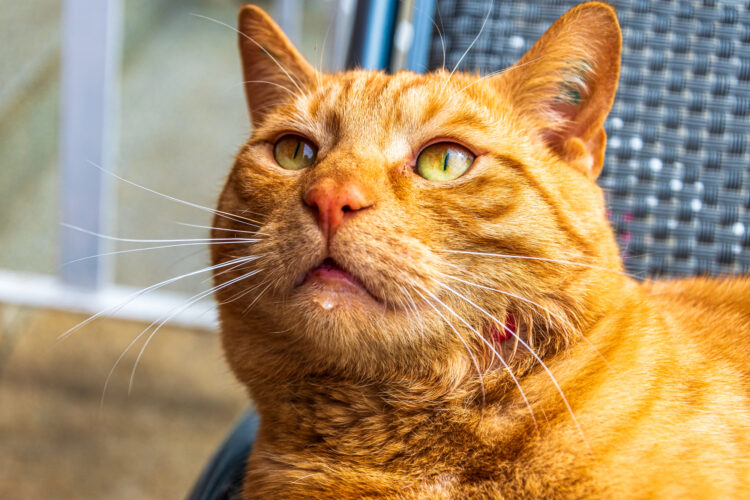
Drooling is one of those symptoms that can mean completely different things depending on the context. While some cats are “happy droolers” who drool while kneading you and purring, for others, it can be a sign that something needs immediate veterinary attention. We’ll explore the most common reasons cats drool, and how to tell the difference between “nothing to worry about” and “call your veterinarian.”
The happy drooler
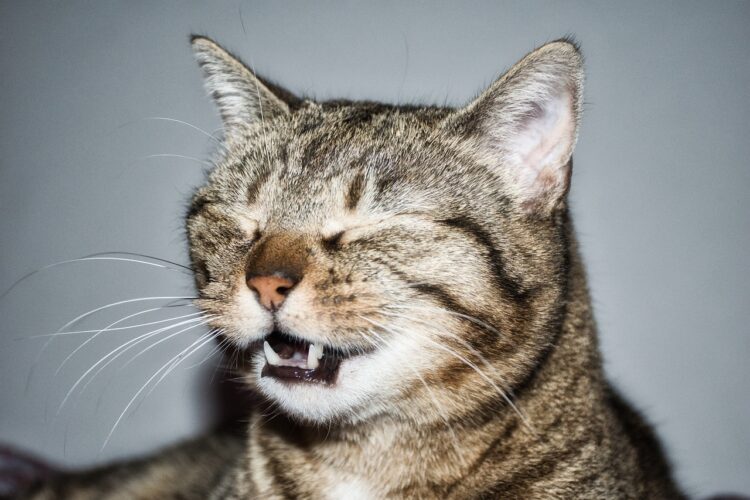
Some cats drool when they’re blissfully happy. Maybe they’re curled up in your lap, purring so hard their eyes are closed. Maybe you’re scratching that perfect spot under the chin. Some cats become so deeply relaxed that they drool a little, much like people who drool while sleeping.
If your cat has always done this, and it only happens during moments of intense contentment, it’s generally nothing to worry about. In fact, many cat parents consider it one of their cat’s most endearing quirks.

Anticipation can cause drooling
Just as we might salivate when we smell our favorite meal, cats can drool when they’re eagerly anticipating something delicious. This is a normal physiological response driven by the digestive system as it gears up for eating.
Stress can trigger drooling
Not all drooling comes from happiness. Some cats drool when they’re frightened, anxious, or nauseated. You might notice this during car rides, veterinary visits, grooming appointments and other stressful situations.
Stress activates the nervous system in ways that can increase saliva production. If the drooling stops once the stressful event is over, it’s usually not cause for alarm.
The most common medical cause for drooling: dental disease
One of the first things veterinarians think about when a cat suddenly starts drooling is dental pain. Since cats are so good at hiding discomfort, by the time they’re drooling, they may have been living with painful teeth or gums for quite some time.
Watch for signs such as bad breath, difficulty chewing, dropping food while eating, pawing at the mouth, red or swollen gums, and weight loss. Dental disease is extremely common in adult cats, and prompt treatment can dramatically improve both comfort and overall health.
Mouth injuries and foreign objects
Cats are naturally curious, which can lead them to sometimes chew on something they shouldn’t, leaving splinters, plant material, string, or other foreign objects lodged in the mouth. A bite to the tongue, a cut inside the mouth, or something stuck between the teeth can all cause excessive drooling.
If your cat suddenly begins drooling and repeatedly paws at their mouth, resists eating, or seems painful, it’s time for an immediate veterinary exam.
Certain plants and chemicals can cause drooling
Some household plants and chemicals can irritate a cat’s mouth, leading to sudden drooling. Even plants that aren’t highly toxic can cause intense oral irritation when chewed. Other potential culprits include household cleaners, human medications, lawn and garden chemicals, and flea products intended for dogs.
If you suspect your cat has been exposed to a toxic substance, don’t wait to see if the drooling improves. Contact your veterinarian or an animal poison hotline immediately.

Nausea can make cats drool
Cats experiencing nausea often produce excess saliva before vomiting. You may notice lip smacking, frequent swallowing, hiding, loss of appetite, vomiting and lethargy.
Nausea can stem from something relatively simple, like a hairball, or from more serious medical conditions involving the kidneys, liver, pancreas, or gastrointestinal tract.
When should you be concerned?
A little drool during a purring session is very different from sudden, excessive drooling in a cat who doesn’t feel well. It’s time to contact your veterinarian if your cat:
- Suddenly starts drooling without an obvious reason
- Drools continuously or excessively
- Stops eating or has difficulty swallowing
- Has bad breath or obvious dental problems
- Is pawing at the mouth
- Has blood in the saliva
- Is vomiting or seems nauseated
- Appears lethargic or painful
- Has been exposed to a possible toxin
- Is drooling along with panting or difficulty breathing
Drooling isn’t one of the behaviors we typically associate with cats, which is exactly why it catches our attention. A single episode of drooling while being petted is usually nothing to lose sleep over. But if the drooling is new, persistent, or accompanied by any other changes in behavior or health, don’t ignore it. Cats are masters at hiding illness, which is why it’s up to us to pay attention to these small clues.
Image Depositphotos

I had a cat that drooled while kneading and I did take him to the vet worried. After an exam, the vet said he must be a happy drooler. I had never heard that term prior to that.